THC is probably the best-known compound associated with cannabis, so it is perfectly reasonable to wonder whether it is already present inside a cannabis seed. After all, seed banks regularly describe varieties as having 20%, 25% or even higher THC levels, which can make it sound as though the seed itself somehow contains that amount of THC.
The reality is quite different. Cannabis seeds do not naturally contain meaningful amounts of THC and they are not intoxicating. The THC percentages associated with different cannabis strains describe the potential cannabinoid profile of the mature plant, not the chemical contents of the seed sitting inside the packet.
There is, however, an interesting scientific wrinkle. Laboratory testing has detected tiny amounts of THC on some cannabis seeds, primarily because resin from surrounding plant material can contaminate the outside of the seed. That is very different from the seed itself producing or storing significant amounts of THC, and it is one of the reasons a simple “yes” or “no” answer does not tell the whole story.
In this guide, we will look at where THC actually comes from, why a seed from a high-THC strain does not itself contain high levels of THC, what scientists have found when cannabis seeds are tested, and what terms such as “high THC cannabis seeds” really mean.
Do Cannabis Seeds Actually Contain THC?
In practical terms, cannabis seeds do not contain meaningful or intoxicating levels of THC. The seed carries the genetic information needed for a cannabis plant to develop, but it is not a miniature version of the mature plant and does not contain the resin-rich flowers where cannabinoids such as THC are predominantly produced.
This distinction is important because the THC figures shown alongside cannabis seeds can easily be misunderstood. If a breeder describes a strain as having 25% THC, for example, that does not mean the seed itself consists of 25% THC. It means that mature plant material produced from those genetics may be capable of reaching THC levels in that region under particular conditions. The figure belongs to the potential characteristics of the mature strain, not the seed.
Scientific testing does make the answer slightly more nuanced. Researchers have detected trace quantities of THC associated with cannabis seeds, but the majority has been found on the seed’s exterior rather than within the kernel itself. This is thought to result largely from contact with cannabinoid-containing resin and plant material during seed development, harvesting and processing.
Why Can Tests Sometimes Detect Trace THC on Cannabis Seeds?
Cannabis seeds develop within the flowering parts of the plant, where they can come into contact with resinous material containing cannabinoids. Tiny amounts of that material can remain on the outer surface of a seed after it has been harvested, which means sensitive laboratory equipment may still detect THC even though the seed itself is not naturally producing meaningful quantities of the cannabinoid.
A published laboratory study analysing both drug-type and fibre-type cannabis seeds found that the majority of the detected THC was located on the surface of the seeds. A simple washing process removed approximately 90% of the total measured THC, while the kernels themselves contained extremely small quantities. This strongly supports the conclusion that much of the THC associated with a cannabis seed comes from external contamination rather than from THC being naturally concentrated inside the seed.
For the ordinary collector, the practical difference is straightforward. A cannabis seed is not a psychoactive product containing a usable amount of THC, even though highly sensitive laboratory equipment may be capable of detecting trace residues on its surface.
Where Does THC Come From in a Cannabis Plant?
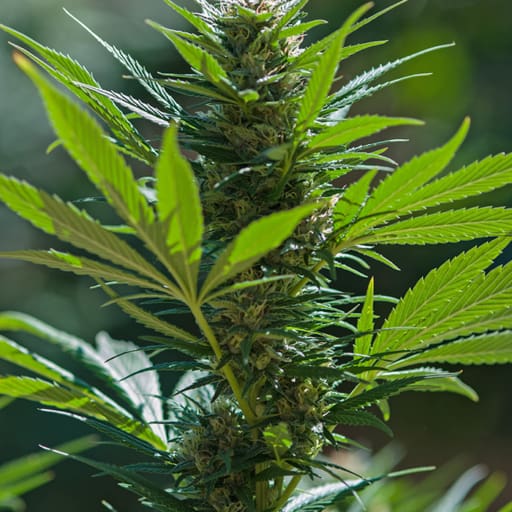
THC, short for tetrahydrocannabinol, is one of the main cannabinoids associated with cannabis. It is primarily associated with the resin produced by glandular structures on the plant, with the highest concentrations generally found around the flowering material of mature female plants.
The plant does not begin life with its mature cannabinoid profile already packed inside the seed. Instead, the seed contains the biological and genetic information required for development. As the plant matures, specialised structures develop and cannabinoid production occurs as part of the plant’s biology. The eventual cannabinoid profile is influenced heavily by genetics, although environmental conditions and other factors can affect the concentrations measured in mature plant material.
This is why two cannabis seeds can look almost identical while belonging to strains with completely different breeder-reported cannabinoid profiles. The important information is contained in the genetics rather than being visible as THC within the seed itself.
What Are Trichomes and What Do They Have to Do With THC?
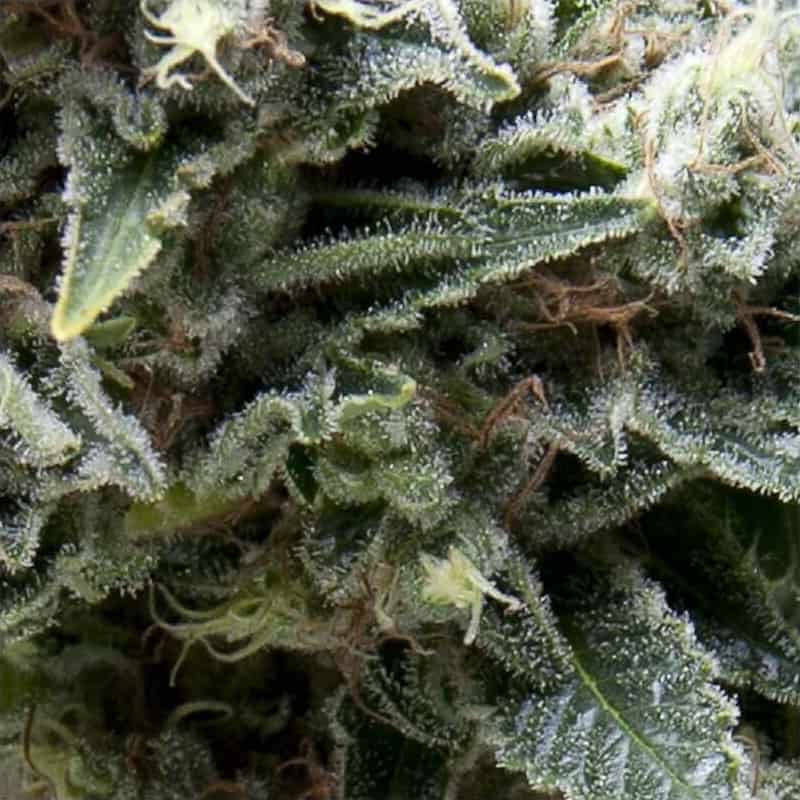
Trichomes are tiny glandular structures found on parts of the cannabis plant, particularly around the flowers and nearby leaves. They produce the resin containing many of the cannabinoids and aromatic compounds associated with mature cannabis, including THC and numerous terpenes.
Seeds do not have the same resin-producing structures as mature flowering material. However, because seeds can develop surrounded by resinous plant tissue, the outside of a seed can come into contact with trichome material. That provides a straightforward explanation for why trace THC may occasionally be detected on a seed without the seed itself being a meaningful source of THC.
If Seeds Don’t Contain THC, What Does “High THC Cannabis Seeds” Mean?
When a breeder or seed bank describes a variety as a “high THC cannabis seed”, the term refers to the genetic potential of the plant associated with that seed. It does not mean the physical seed contains a high concentration of THC.
Cannabis breeders selectively work with parent plants displaying particular characteristics and develop genetic lines intended to reproduce those traits with increasing consistency. Cannabinoid profile is one of those characteristics, alongside features such as plant structure, flowering behaviour, terpene profile and other breeder-reported traits. Over multiple generations, breeders can develop varieties associated with comparatively high or low THC levels in mature plant material.
This is also why cannabinoid information appears across our cannabis seed collection. The figures help collectors compare the genetics and reported characteristics of different strains, but they should not be interpreted as a laboratory measurement of the seed itself.
THC Percentage Describes the Plant, Not the Seed
Suppose you are comparing two varieties and one is listed by its breeder at 10% THC while another is listed at 25%. That difference describes the cannabinoid profiles associated with mature plant material produced from those genetic lines. It does not mean one seed contains two and a half times as much THC as the other.
Breeder THC percentages should also be understood as estimates or reported results rather than an absolute guarantee. Cannabis is a biological product, and cannabinoid concentrations in mature plants can vary according to phenotype and environmental conditions. The genetics establish the potential, but the percentage displayed beside a strain should not be read as a fixed chemical quantity contained within every seed.
Can Cannabis Seeds Get You High?
No. Cannabis seeds are not intoxicating and will not produce a cannabis high. The trace quantities of THC that laboratory testing may detect on some seeds are nowhere near the same thing as the cannabinoid-rich resin associated with mature cannabis flowers.
This is another situation where the genetics can create confusion. A seed belonging to a strain famous for a high THC percentage may carry the genetic potential for that characteristic, but the seed itself is not psychoactive. Simply possessing, handling or collecting such a seed does not expose somebody to the effects normally associated with THC-rich cannabis.
The easiest way to think about it is that the seed carries instructions rather than the finished product. Genetic information may influence what a mature plant is capable of producing, but those compounds are not already present in the seed at the same concentrations.
Do Cannabis Seeds Contain CBD or Other Cannabinoids?
The same basic principle applies to CBD. Cannabis seeds are not a meaningful natural source of CBD simply because the genetics are associated with a CBD-rich plant. Like THC, CBD is primarily associated with the cannabinoid-producing structures that develop on mature cannabis plants rather than being stored at significant levels within the seed.
This is particularly important when looking at CBD cannabis seeds. A variety may be described as CBD-dominant or as having a particular CBD-to-THC ratio, but those figures refer to the expected or breeder-reported cannabinoid characteristics of mature plant material. They do not mean that a CBD-dominant seed itself contains a large quantity of CBD.
Small traces of cannabinoids can potentially occur on the external seed surface because of contact with resinous material, just as they can with THC. That should not be confused with the seed being a cannabinoid-rich product in its own right.
What Is Actually Inside a Cannabis Seed?
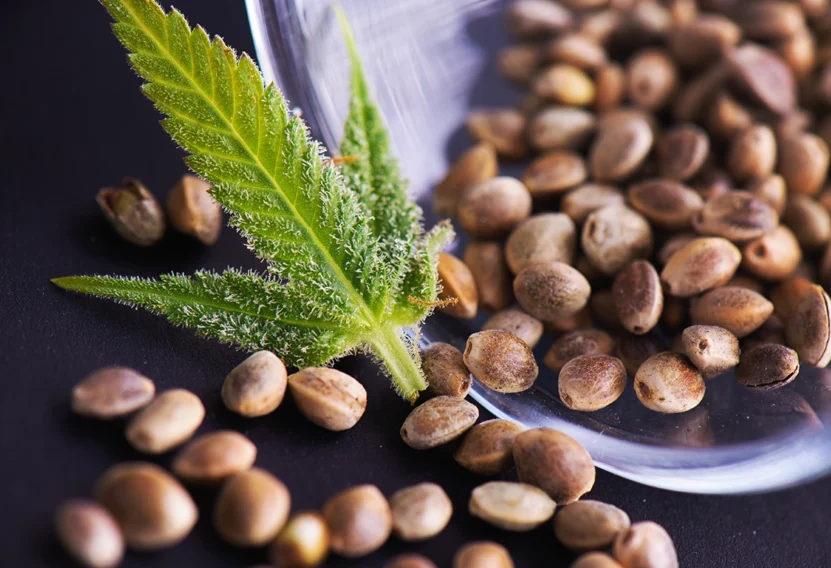
If THC and CBD are not sitting inside the seed in meaningful quantities, what is? Like other seeds, a cannabis seed is essentially a biological package designed to protect and support an embryo. It includes an outer seed coat surrounding the embryo and stored nutrients that can support the earliest stages of development if the seed is germinated in circumstances where doing so is lawful.
Cannabis seeds also contain fats, proteins and other nutrients, which is why seeds from low-THC hemp varieties are widely used as a food ingredient. Shelled hemp seeds, hemp seed oil and hemp protein products are now common in supermarkets and health-food shops, despite coming from the same broader plant species associated with cannabis.
What makes one cannabis seed genetically different from another is therefore not a reservoir of THC hidden inside the shell. It is the inherited genetic information passed down through its parent plants. Those genetics influence characteristics that may later be expressed by a mature plant.
Cannabis Seeds vs Hemp Seeds: Is There a Difference in THC?
The terms “cannabis seed” and “hemp seed” can make it sound as though they refer to two completely unrelated plants, but hemp is also cannabis. The distinction generally relates to the genetics of the plant and, importantly, the cannabinoid profile it is capable of producing rather than to one type of seed physically containing large amounts of THC and the other containing none.
A seed originating from genetics associated with high-THC cannabis is still not packed with THC, just as a hemp seed is not full of CBD simply because the mature plant may have a different cannabinoid profile. The major difference lies in the inherited characteristics of the genetics and what the resulting plant may be capable of expressing.
This helps explain why hemp seeds can be widely sold for food while cannabis seed collectors may be interested in very different genetic lines. The seeds may carry dramatically different genetic potential, even though neither seed should be thought of as a concentrated source of cannabinoids.
Why Can a Seed From a High-THC Strain Contain Virtually No THC?
It can initially seem strange that a seed associated with a very high-THC strain can itself contain virtually no THC, but genetics and chemistry are two different things. A useful comparison is the difference between a blueprint and the building described by that blueprint. The information required to produce certain characteristics can be present without the finished materials or structures being there yet.
A cannabis seed carries genes inherited from its parent plants. Those genes may contribute to a mature plant’s ability to produce particular cannabinoids, terpenes and physical characteristics, but the seed does not need to contain those finished compounds in meaningful quantities to carry that information.
The same principle applies across different seed types. Feminised cannabis seeds, autoflowering cannabis seeds and regular cannabis seeds can all be associated with THC-dominant, CBD-rich or more balanced genetics. Whether a seed is feminised, autoflowering or regular does not mean THC is physically stored inside it.
Does the Lack of THC Make Cannabis Seeds Legal in the UK?
You will sometimes see the legality of cannabis seeds explained simply as “cannabis seeds are legal because they don’t contain THC”. That gets close to the practical distinction, but it oversimplifies the actual legal position.
In the UK, a separated cannabis seed is specifically excluded from the definition of cannabis under Section 37 of the Misuse of Drugs Act 1971. Cultivation is dealt with separately under the law, which is why legally buying or possessing cannabis seeds should not be confused with having permission to germinate or cultivate them.
The absence of meaningful THC therefore helps explain why a seed is chemically very different from controlled cannabis material, but it is better to look at the legislation itself when discussing legality rather than treating THC content as the sole reason. We cover that distinction in much greater detail in our guide to UK cannabis seed law.
What Does Scientific Research Say About THC in Cannabis Seeds?
One of the most useful studies on the subject analysed THC levels in both drug-type and fibre-type cannabis seeds using gas chromatography-mass spectrometry, a laboratory technique capable of detecting extremely small quantities of compounds.
The researchers detected higher total THC levels on drug-type seeds than on fibre-type seeds, but the important finding was where the THC was located. Most of it was associated with the seed’s outer surface. Approximately 90% of the measured THC could be removed by washing the seeds, while analysis of the kernels found only extremely small quantities. The researchers concluded that much of the variation in measured THC was related to contamination of the seed surface.
That finding explains why apparently conflicting statements about THC and cannabis seeds can both contain part of the truth. Saying that scientists can detect THC associated with some cannabis seeds is technically correct, but saying that cannabis seeds are a meaningful source of THC would be misleading. Modern laboratory equipment can detect incredibly small residues, including material transferred from neighbouring parts of the plant.
The more useful answer for collectors is therefore that a cannabis seed does not naturally contain an intoxicating amount of THC, while trace amounts can sometimes be detected as a result of resin or plant material on its exterior.
Frequently Asked Questions About THC and Cannabis Seeds
Can You Smell THC in a Cannabis Seed?
No. THC itself is not responsible for the familiar aromas associated with different cannabis strains. Those aromas are largely connected with volatile compounds such as terpenes, which contribute to the different citrus, earthy, floral, pine, fuel and fruit characteristics associated with mature cannabis varieties.
A seed’s appearance or smell therefore cannot reliably tell you how much THC its genetics may be capable of producing. Breeder information and known lineage are far more useful when comparing the genetic characteristics associated with different strains.
Do Feminised Cannabis Seeds Contain THC?
Feminised cannabis seeds do not contain meaningful or intoxicating amounts of THC simply because they have been feminised. Feminisation relates to the genetic likelihood of the resulting plant being female rather than to the amount of THC physically contained within the seed.
A feminised variety can be associated with high-THC, low-THC, CBD-rich or balanced genetics depending on the strain.
Do Autoflowering Cannabis Seeds Contain THC?
Autoflowering cannabis seeds are not a source of intoxicating THC either. The term “autoflowering” relates to genetics that allow the resulting plant to begin flowering primarily according to maturity rather than relying entirely on seasonal changes in the light cycle.
Autoflowering varieties can have a wide range of breeder-reported cannabinoid profiles, but those figures describe potential mature plant material rather than the seed itself.
Do Regular Cannabis Seeds Contain THC?
The same principle applies to regular cannabis seeds. Regular seeds retain both male and female genetic potential, but that characteristic does not mean the seeds themselves contain significant THC.
Regular genetics can be associated with everything from low-THC and CBD-rich lines to strains bred for very high THC potential. Again, it is the genetic information that differs rather than a large quantity of THC being stored inside the seed.
Can You Tell How Much THC a Plant Could Produce From Looking at the Seed?
No. The colour, size, pattern or shape of a cannabis seed cannot reliably tell you whether its genetics are associated with high or low THC levels. Two seeds can look extremely similar while belonging to completely different strains with very different cannabinoid profiles.
If cannabinoid potential matters when comparing seeds, the breeder, strain lineage and published product information are much more useful than visual appearance. Even then, breeder-reported THC percentages should be regarded as an indication of genetic potential rather than a guarantee of an exact result.
Does a Cannabis Seed’s THC Potential Affect Its Legal Status in the UK?
The fact that a seed is associated with high-THC genetics does not mean the separated seed itself contains that THC percentage or is automatically treated as THC-rich cannabis material. UK law distinguishes between the separated seed and cultivation of the cannabis plant.
This means a seed associated with a variety reported at 25% THC is not treated as though the seed itself contains 25% THC. The legal issues surrounding cultivation are separate from the cannabinoid potential described by the breeder.
So, Do Cannabis Seeds Contain THC?
Cannabis seeds do not naturally contain meaningful or intoxicating amounts of THC. What they contain is the genetic information that can influence the cannabinoid profile of a mature cannabis plant. This is why a seed can belong to genetics associated with very high THC levels while the seed itself remains non-intoxicating.
Sensitive laboratory testing can detect tiny quantities of THC associated with some cannabis seeds, but research indicates that most of this is found on the seed’s exterior and is largely the result of contact with resinous plant material. It should not be confused with the seed naturally producing or storing significant quantities of THC.
So when you see THC percentages alongside a cannabis strain, think of them as information about the genetic potential of the mature plant, not the contents of the seed. If you are comparing different genetics, you can explore the full BudChampion cannabis seed collection, including regular, feminised, autoflowering and CBD-rich varieties from recognised breeders around the world.