Leaf Septoria on Cannabis – Symptoms, Causes, Prevention and Treatment
Leaf Septoria, sometimes referred to as yellow leaf spot, is a fungal disease that can affect cannabis plants and damage their foliage if it is allowed to spread.
The disease is particularly associated with damp, humid conditions and typically begins on the older, lower leaves before progressing further up the plant. Because its early symptoms can sometimes resemble nutrient deficiencies or other leaf problems, correctly identifying Leaf Septoria is important before deciding how to manage it.
In this article we explore the causes of Leaf Septoria on cannabis plants, how to identify the symptoms, how it spreads and the most effective prevention and management strategies.
What is Leaf Septoria?
Leaf Septoria is a fungal leaf spot disease associated with Septoria fungi. On cannabis and hemp, the disease is most commonly associated with Septoria cannabis, although other closely related Septoria species have also been recorded.
Cannabis belongs to the Cannabaceae family, and the Septoria pathogens associated with cannabis should not be confused with Septoria species responsible for similar-looking diseases in crops such as tomatoes.
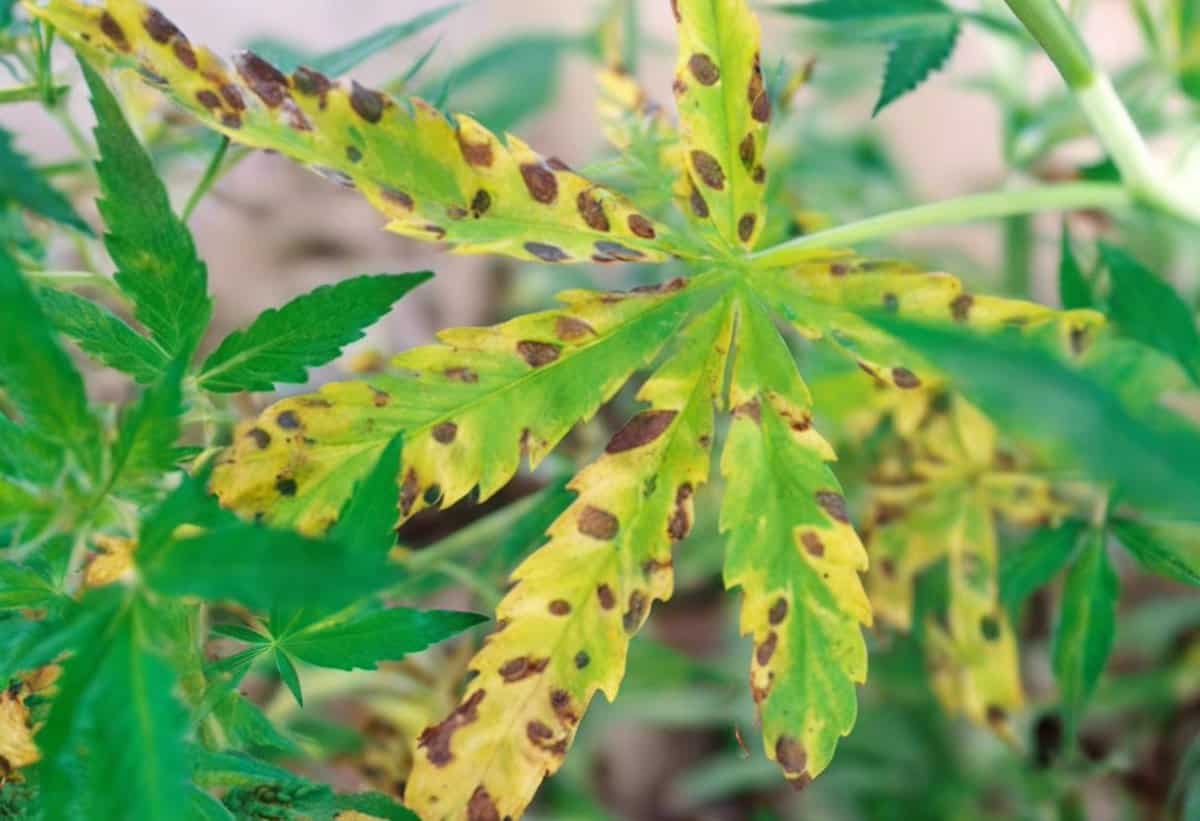
The fungus primarily attacks the leaves of the cannabis plant. Infection commonly begins with small yellow, tan or brown lesions, often with darker margins and lighter centres. Tiny black dots can sometimes develop within the lesions. These are fungal fruiting structures known as pycnidia and can be a useful indicator that the problem is Leaf Septoria rather than a nutrient deficiency.
As the disease progresses, the spots can enlarge and merge, while affected leaves increasingly turn yellow or brown before drying out and dying. Extensive loss of healthy foliage reduces the plant’s ability to photosynthesise effectively and can weaken its overall growth.
Causes of Leaf Septoria on Cannabis
- Humidity and Moisture: Leaf Septoria favours damp conditions and prolonged moisture on leaf surfaces. High humidity, poor ventilation and consistently wet foliage can therefore make infection and spread more likely.
- Infected Plant Debris: Septoria fungi can survive on infected or dead plant material. Fallen leaves and other contaminated debris around plants can therefore provide a source of spores for future infections.
- Splashing Water: Rain, overhead watering and splashing water can move fungal spores from contaminated material onto healthy leaves. This is one reason symptoms frequently begin on foliage close to the ground.
- Overcrowding Plants: When plants are crowded closely together, air circulation is reduced and leaves can remain damp for longer. These conditions can favour the development and spread of fungal leaf diseases.
- Contaminated Tools and Equipment: Spores can potentially be transferred on gardening tools, containers and other equipment that has been in contact with infected plant material.
Leaf Septoria Symptoms
Early detection of Leaf Septoria can make the disease considerably easier to manage. Symptoms often appear first on older leaves towards the lower part of the plant before gradually moving upwards.
Common symptoms can include:
- Small Spots: small yellow, tan or brown spots begin developing on the leaves, commonly with darker margins and paler centres.
- Yellow Halos: a yellow area may develop around individual lesions as surrounding leaf tissue begins to lose chlorophyll.
- Dark Pinprick Spots: tiny black or dark brown dots may become visible towards the centre of established lesions. These can be the pycnidia produced by the fungus.
- Enlargement of Spots: individual lesions gradually enlarge and can eventually merge, creating larger irregular areas of damaged tissue.
- Leaf Yellowing: infected leaves increasingly turn yellow as the disease progresses.
- Leaf Necrosis: severely affected areas become brown and dry as the leaf tissue dies. In advanced infections, affected leaves may eventually fall from the plant.
Leaf Septoria or a Nutrient Deficiency?
Leaf Septoria can sometimes be mistaken for problems such as calcium, magnesium or nitrogen deficiencies because all of these conditions can produce discolouration or spotting on cannabis leaves.
One useful difference is the pattern of the damage. Leaf Septoria commonly produces individual circular or irregular lesions with defined darker borders, yellowing around the affected tissue and, in some cases, tiny dark pycnidia inside the spots. Symptoms also commonly begin on older leaves towards the bottom of the plant.
Nutrient problems tend to produce broader patterns of discolouration, spotting or marginal damage rather than clearly defined fungal lesions. Looking at where the symptoms first appeared and how they develop across individual leaves can therefore help distinguish Leaf Septoria from other cannabis leaf problems.
Leaf Septoria on Cannabis Prevention
- Good Ventilation: Maintain adequate air circulation around plants so that foliage does not remain damp for prolonged periods.
- Good Watering Practices: Avoid unnecessary moisture on the foliage and, where possible, direct water towards the growing medium rather than repeatedly wetting the leaves.
- Spacing: Ensure that plants have sufficient space between them to allow air to circulate through the surrounding foliage.
- Keep the Growing Area Clean: Remove fallen leaves, dead vegetation and other plant debris that could harbour fungal material.
- Clean Tools and Equipment: Clean pruning equipment, containers and other reusable growing equipment, particularly after they have been in contact with affected plants.
- Remove Infected Foliage: Carefully remove badly affected leaves and dispose of them away from healthy plants rather than leaving them on the soil or adding them to material that will be reused.
Leaf Septoria Treatment
There is no treatment that will restore leaf tissue that has already been killed by Leaf Septoria. Management therefore concentrates on slowing further spread, reducing the amount of infectious material present and creating conditions that are less favourable to the fungus.
There are a number of strategies commonly used to manage Leaf Septoria:
- Pruning: removing clearly infected leaves can reduce the amount of fungal material present. Avoid unnecessarily removing large amounts of otherwise healthy foliage.
- Reduce Leaf Moisture: address persistently damp conditions and avoid repeatedly wetting foliage, as moisture assists the development and movement of fungal spores.
- Improve Air Circulation: reducing stagnant, humid conditions around affected foliage can make the environment less favourable for further disease development.
- Fungicides: appropriate fungicides may help suppress further development of Septoria leaf spot, although their effectiveness varies considerably between products. Only products legally approved and labelled for the crop and intended use should be considered, and label instructions should always be followed.
- Copper-Based Fungicides: copper products are commonly used against a range of fungal leaf diseases, but they should not be regarded as a cure for tissue that is already infected. Excessive copper use can also lead to unwanted accumulation in soil, so these products should be used cautiously and only where suitable.
- Biological Controls: biofungicides containing microorganisms such as certain Bacillus strains have been investigated for fungal disease suppression. Results against Septoria cannabis can vary, so biological products should be viewed as one part of an overall disease-management approach rather than a guaranteed cure.
Recent research into Septoria cannabis has found considerable differences in the effectiveness of individual disease-control products. For this reason, sanitation, removal of infected material and management of the environmental conditions that favour the fungus remain particularly important.
What Have We Learnt About Leaf Septoria on Cannabis?
Leaf Septoria can cause substantial damage to cannabis foliage when suitable conditions allow the disease to spread unchecked. Fortunately, recognising the characteristic leaf spots early and reducing the conditions that favour fungal development can make the problem much easier to manage.
Pay particular attention to older, lower leaves developing small yellow or brown lesions with darker borders. The presence of tiny dark pycnidia within these lesions can provide another useful clue that Leaf Septoria is responsible.
Removing infected foliage and fallen plant material, keeping equipment clean, reducing prolonged leaf moisture and maintaining good airflow can all help limit further spread. Most importantly, Leaf Septoria should be correctly identified before treatment, as nutrient deficiencies and several other cannabis leaf problems can produce superficially similar symptoms.