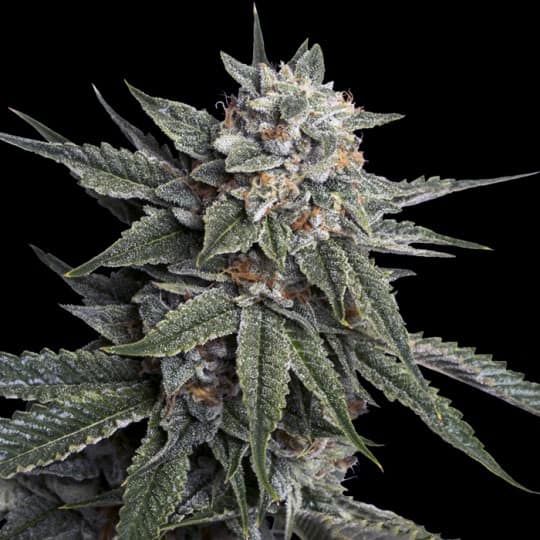

Crossbreeding different cannabis strains has created countless new genetic combinations, and few British varieties have influenced that process quite like Cheese. What began as a particularly distinctive Skunk #1 phenotype in the UK eventually developed into an entire family of Cheese hybrids, combining its famous pungent character with genetics from Blueberry, Afghani, Haze, Diesel and many other strain families.
Unlike many modern strains, the original UK Cheese was circulated primarily as a clone rather than being created as a commercial seed variety. Breeders therefore began crossing the original Cheese genetics with other plants to preserve some of its defining characteristics while creating stable seed lines and entirely new hybrids.
In this article, we explore how Cheese cannabis became such an important breeding parent, some of the best-known Cheese hybrids and how different crosses have transformed the aroma, genetics and overall character of this British cannabis classic.
How Cheese Became a Breeding Strain
The original UK Cheese is generally traced to a particularly pungent phenotype of Skunk #1 discovered in southern England during the late 1980s or early 1990s. The clone became closely associated with the Exodus collective and spread through the UK cannabis scene because of its unmistakable aroma and distinctive character.
Because the original Cheese was clone-only, breeders looking to reproduce it in seed form faced an obvious challenge. Rather than simply producing seeds from the original plant, they crossed Cheese with carefully selected genetics and then developed new lines designed to retain some of its defining qualities.
This process ultimately turned Cheese from a single famous British clone into a much broader genetic family. Some breeders concentrated on preserving its old-school Skunk character, while others deliberately introduced fruit, fuel, Kush or Haze traits to create something noticeably different.
Big Buddha Cheese
One of the most important developments in Cheese breeding came with Big Buddha Cheese. Breeder Big Buddha crossed the original UK Cheese clone with selected Afghani genetics, creating one of the first widely available Cheese varieties in seed form.
The cross maintained the recognisable pungent Cheese character while introducing additional Afghani influence. Big Buddha Cheese subsequently won the Indica category at the 2006 High Times Cannabis Cup, considerably increasing international awareness of Cheese genetics.
Its importance extends beyond the strain itself. Big Buddha Cheese became a breeding parent for numerous later Cheese varieties, helping move the genetics beyond Britain’s clone-sharing culture and into seed catalogues around the world.
Blue Cheese
Perhaps the best-known Cheese hybrid is Blue Cheese, which combines UK Cheese genetics with Blueberry. The pairing is particularly distinctive because it brings together two very different flavour families: the savoury, skunky pungency associated with Cheese and the sweet berry character for which Blueberry became famous.
Different breeders have produced their own Blue Cheese interpretations, so exact genetic details can vary. The basic Cheese × Blueberry combination, however, has become established enough that Blue Cheese is now recognised as an important strain family in its own right.
It also demonstrates exactly why Cheese became such an appealing breeding parent. Its powerful aroma is distinctive enough to remain recognisable even when combined with dramatically different genetics.
Other Notable Cheese Hybrids
Blue Cheese is only one branch of a much larger Cheese family. Breeders have repeatedly crossed Cheese genetics with other established strains to take its recognisable character in different directions.
Sour Cheese combines Cheese-type genetics with Diesel influence, bringing sharper fuel and sour characteristics into the profile. Silver Cheese combines Cheese genetics with Super Silver Haze, introducing the influence of one of the most famous Haze families.
Other examples include Cheese crosses involving Kush, Bubble Gum, White-family and Cookies genetics. Big Buddha Seeds alone has subsequently used its Cheese line in combinations including Black Cheese, Silver Cheese and Cookies and Cream Cheese.
The result is not one uniform family in which every strain tastes or behaves like the original UK Cheese. Instead, Cheese has become a genetic building block that breeders can use to introduce its distinctive Skunk-derived character into otherwise very different hybrids.
Are Cheese Hybrids Indica Dominant?
Many well-known Cheese hybrids are described as indica-dominant, particularly varieties that combine Cheese with Afghani, Blueberry or other indica-influenced genetics. Big Buddha Cheese and many versions of Blue Cheese are good examples.
However, it would be misleading to describe all Cheese hybrids as indica-dominant. The eventual balance depends heavily on the second parent. Crossing Cheese with a strongly sativa-influenced strain such as Super Silver Haze can produce a very different genetic expression from crossing it with an Afghani or Kush variety.
This is one reason the word “Cheese” alone tells you relatively little about a modern hybrid. The other parent, breeder selection and generation of the cross can substantially change its characteristics while still retaining some element of the original Cheese identity.
How Crossbreeding Changes Cheese
The purpose of crossbreeding Cheese is not necessarily to reproduce the original clone exactly. Breeders may instead be trying to preserve one particular characteristic while modifying others.
With Blue Cheese, for example, the sweet berry influence of Blueberry creates a very different sensory profile while the distinctive Cheese pungency remains apparent. Diesel crosses can introduce sour and fuel-like notes, while Haze crosses can move the profile towards spice, citrus and incense.
Plant characteristics can change in the same way. Different Cheese hybrids can vary considerably in structure, flowering behaviour, cannabinoid content and overall genetic balance depending on the breeding partner involved.
Terpenes in Cheese Hybrids
One of the main reasons Cheese has remained attractive to breeders is its highly recognisable aroma. Original Cheese is associated with a powerful mixture of skunky, earthy, musky and savoury characteristics that can remain noticeable in its descendants.
Crossbreeding can add an entirely new layer to that profile. A Cheese × Blueberry combination may introduce sweeter berry characteristics, while Cheese crossed with Diesel genetics can produce a sharper sour or fuel-influenced profile.
The exact terpene composition cannot be assumed simply from a strain name. Different phenotypes and breeder versions can produce different terpene concentrations, meaning two Cheese hybrids can smell noticeably different even when both descend from similar genetics.
Cannabinoids in Cheese Hybrids
The same principle applies to cannabinoids. There is no single THC or CBD percentage that defines a Cheese hybrid because cannabinoid levels depend on the particular parents, breeder selection, phenotype and environmental conditions.
Modern Cheese crosses can therefore range from THC-dominant recreational varieties to genetics specifically developed with a different cannabinoid balance. The Cheese name describes ancestry rather than guaranteeing one fixed chemical profile.
For anyone comparing Cheese-derived strains, the breeder’s stated lineage and individual strain information are more useful than assuming every Cheese hybrid will closely resemble the original UK clone.
Cheese Genetics and Modern Seed Breeding
The evolution of Cheese from a clone-only British favourite into an international seed family is one of the most interesting parts of its history.
Regular and feminised Cheese-derived seed lines allowed breeders to work with the genetics much more widely, while later autoflowering varieties introduced autoflower traits into the family. As a result, the Cheese name now appears across a much broader range of genetics than existed during the strain’s early UK history.
That expansion inevitably means modern Cheese seeds should not all be treated as genetically identical to Exodus Cheese. Some aim to remain relatively close to the classic profile, while others are deliberately distant hybrids that retain only part of the original Cheese ancestry.
The Future of Cheese Cannabis Crossbreeds
Cheese has already moved through several generations of cannabis breeding. It began as a standout Skunk #1 phenotype, became a famous UK clone, was incorporated into seed lines such as Big Buddha Cheese and then became a parent behind hybrids ranging from Blue Cheese to Haze, Diesel, Kush and Cookies crosses.
That versatility is a major reason the genetics have survived while many other strains from the same period have faded from breeder catalogues. Cheese possesses an identity strong enough to remain recognisable while still combining effectively with very different genetic families.
For breeders, collectors and anyone interested in cannabis history, Cheese hybrids demonstrate how one unusual phenotype can influence decades of breeding. What started as an unmistakably pungent UK clone has developed into a diverse international family of strains while retaining a clear connection to the original Cheese legacy.