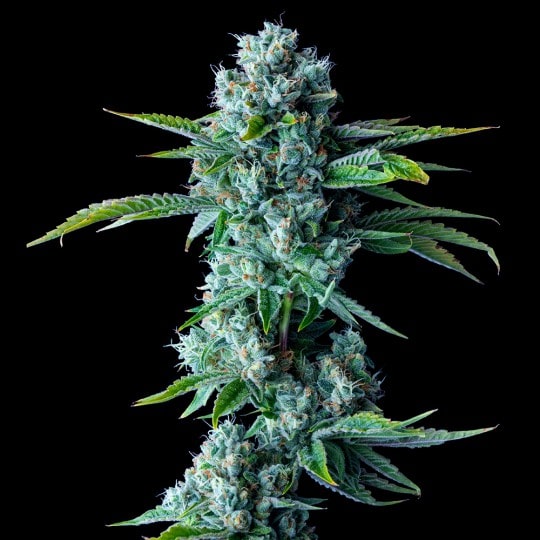

The Cheese strain, famous for its unmistakably pungent aroma and savoury flavour profile, has become one of the most recognisable names in modern cannabis culture. Although Cheese is often discussed simply as a strain, its story is really one of selection, underground reputation and the lasting influence of a single standout phenotype that went on to shape an entire family of genetics.
In this article, we take a closer look at the history of Cheese cannabis, including its likely origins, the role of the UK scene in establishing its reputation and the way Cheese genetics later spread into seed form and hybrid breeding. We also touch on its terpene profile, why growers were drawn to it and how the Cheese name continues to influence cannabis breeding today.
Origins of the Cheese Strain
The origins of Cheese are generally traced back to the United Kingdom in the late 1980s or early 1990s. Most accounts describe Cheese not as a completely separate strain created from scratch, but as a particularly pungent phenotype of Skunk #1 that stood out for its unusually strong aroma and distinctive character.
That origin story helps explain why Cheese became so memorable. Skunk #1 was already one of the most important strains in cannabis history, but this particular phenotype developed a smell so striking that it quickly earned its own identity. The name “Cheese” followed naturally, thanks to the savoury, musky and almost fermented character of the aroma.
The Exodus Connection
No history of Cheese is complete without mentioning the UK collective Exodus. The cut that became most closely associated with Cheese is often referred to as Exodus Cheese, and it played a major role in spreading the strain’s reputation through the British cannabis scene.
For many years, Cheese was especially associated with clone-only circulation rather than a standardised commercial seed line. This helped build its mystique. Growers and enthusiasts were often discussing a specific UK clone rather than one universally agreed seed version, which is one reason the terms Cheese, UK Cheese and Exodus Cheese are still used with slightly different meanings depending on the context.
Cheese Cannabis Genetics
Cheese cannabis seeds available today usually trace their heritage back to that famous Skunk #1-derived phenotype, but it is worth noting that there is no single modern Cheese seed line that can be treated as the definitive original. Different breeders have created their own interpretations, selections and stabilised versions over time.
Cheese is generally described as indica-leaning in structure and effect, with a compact, branchy growth habit and strong vigour, although exact traits can differ between breeder versions. Modern seed offerings now include regular, feminised and autoflowering forms, each representing a slightly different expression of the broader Cheese genetic family.
Cheese Terpenes
The thing that made Cheese famous more than anything else was its aroma. While exact terpene profiles vary from one breeder or phenotype to another, Cheese is typically associated with a pungent blend of earthy, musky, savoury and skunky notes.
Terpenes such as myrcene and caryophyllene are commonly linked with this type of profile, while some versions can also show sharper herbal, peppery or slightly citrus accents. If you want a deeper look at how these compounds shape the aroma, see our separate guide to the Cheese terpene profile.
Why Growers Took to Cheese
Cheese gained a strong following not only because of its aroma, but also because growers regarded it as a dependable and rewarding plant. It developed a reputation for vigorous growth, a manageable structure and a relatively straightforward flowering period, which helped make it attractive to cultivators as well as consumers.
Its popularity with growers also helped the strain spread more widely. Once a clone develops a reputation for both quality and reliability, it tends to travel quickly through cultivation circles, and that was clearly the case with Cheese.
For practical cultivation information, see our separate guide to growing UK Cheese, as this article is focused primarily on the strain’s history and legacy.

Crossbreeding Cheese Cannabis
Cheese genetics went on to play an important role in cannabis breeding, particularly once the strain became well known outside the UK. Breeders quickly saw the value in combining that famous pungent profile with other established strains.
This led to a wide range of Cheese hybrids, many of which became notable in their own right. Blue Cheese is one of the best-known examples, bringing together Cheese and Blueberry, while other hybrids have combined Cheese with Kush, Diesel or Haze-related genetics.
Our article on crossbreeding UK Cheese hybrids explores that side of the strain’s history in more detail.
Cheese’s Lasting Influence
Cheese has remained relevant for decades because it represents more than just a single strain. It is part of a wider lineage that connects classic Skunk genetics, the UK underground cannabis scene and a long list of later hybrid developments.
Its influence is also a reminder that some of the most important cannabis varieties were not created as polished commercial products from the beginning. Instead, they emerged through selection, circulation and reputation, eventually becoming established enough to inspire entire seed ranges and breeding projects.
Modern Cheese seed lines can vary in cannabinoid content and overall character depending on the breeder, so no single THC or CBD figure can define the strain as a whole. What remains consistent is the enduring appeal of the Cheese identity itself.
To Sum Up
Cheese cannabis evolved from a standout Skunk #1 phenotype into one of the most recognisable strain families in cannabis culture. Its likely origins in the UK, close association with the Exodus cut and unmistakable aroma helped it earn a reputation that has lasted for decades.
Today, Cheese remains important not only because of the original clone’s legacy, but also because of the many feminised, regular, autoflowering and hybrid interpretations that followed. Whether you are interested in its history, its flavour profile or its place in breeding, Cheese has secured its position as a genuine cannabis classic.